
Collagen is the protein that gives structure to your skin, bones, joints and connective tissue. As we age, natural collagen production drops, which is a big reason collagen supplements have become one of the most popular products on our shelves. Harvard Health
The industry is growing fast. Collagen-based products dominate the nutricosmetics (beauty-from-within) category, according to NutraIngredients' 2026 trends round-up. Brands are also moving beyond capsules and powders. More than one in three collagen users say they'd like to try new formats, such as liquids, according to NutraIngredients' Expo West 2026 coverage. Analysts at Fortune Business Insights project the global collagen supplements market will grow from $4.83 billion in 2026 to $8.95 billion by 2034. Nutricosmetics trends 2026: What brands need to know +2
But popularity isn't proof. Here's what the evidence shows.
What does the research say about skin?
Skin is the most studied area. A 2023 systematic review and meta-analysis in Nutrients pooled 26 randomised controlled trials involving 1,721 people and found hydrolysed collagen improved skin hydration and elasticity compared with placebo. A newer meta-analysis published in August 2026 also found improvements in both hydration and elasticity, though the trials varied a lot in design, so results should be read with care. ResearchGateDOI
The picture isn't one-sided. A 2025 review in The American Journal of Medicine found that studies not funded by pharmaceutical companies showed no effect on skin hydration, elasticity or wrinkles. Harvard Health sums it up: there is evidence that collagen supplements help skin, but individual studies have been small and product quality varies. The American Journal of Medicineharvard
What about joints and the rest of the body?
Harvard Health notes that some scientific evidence suggests collagen supplements may help with skin elasticity, hair and nails, joint pain and bone density, while advising people to be sceptical. A 2026 umbrella review in Aesthetic Surgery Journal Open Forum is pulling together the evidence on skin and musculoskeletal health, and research in this area is ongoing. Harvard Health
Where vitamin C comes in
Vitamin C is one nutrient with an established link to collagen. In Great Britain, vitamin C is authorised to state that it contributes to normal collagen formation for the normal function of skin, bones, cartilage, gums, teeth and blood vessels. The body can't synthesise collagen without it, which is why many formulas pair the two. A diet rich in fruit and vegetables is a good starting point too. NE CommerceNapiers
How to choose a collagen supplement
- Look for hydrolysed collagen (collagen peptides). UCLA Health recommends collagen peptides or hydrolysed collagen, which are broken into smaller fragments. UCLA Health
- Check the dose. One meta-analysis in the Indian Journal of Dermatology, Venereology and Leprology found doses between 1 and 10 g a day were effective, with a median of 3.5 g. Formats vary widely, so always check how much collagen you're getting per day. Indian Journal of Dermatology, Venereology and Leprology
- Read the ingredients. Harvard Health advises avoiding supplements with too many additives or fillers. Harvard Health
- Consider your source and diet. Marine, bovine and other sources are available, and capsule shells vary for vegetarian, halal or other dietary needs.
- Speak to your GP first if you need to. People prone to gout, or with conditions that require limiting protein, should not use collagen supplements or drinks. Harvard Health
Supplements also work best alongside good habits. Collagen supplements shouldn't replace changing unhealthy behaviours such as smoking, skipping sun protection or not getting enough sleep. UCLA Health
Our pick: Applied Nutrition Collagen + Coconut
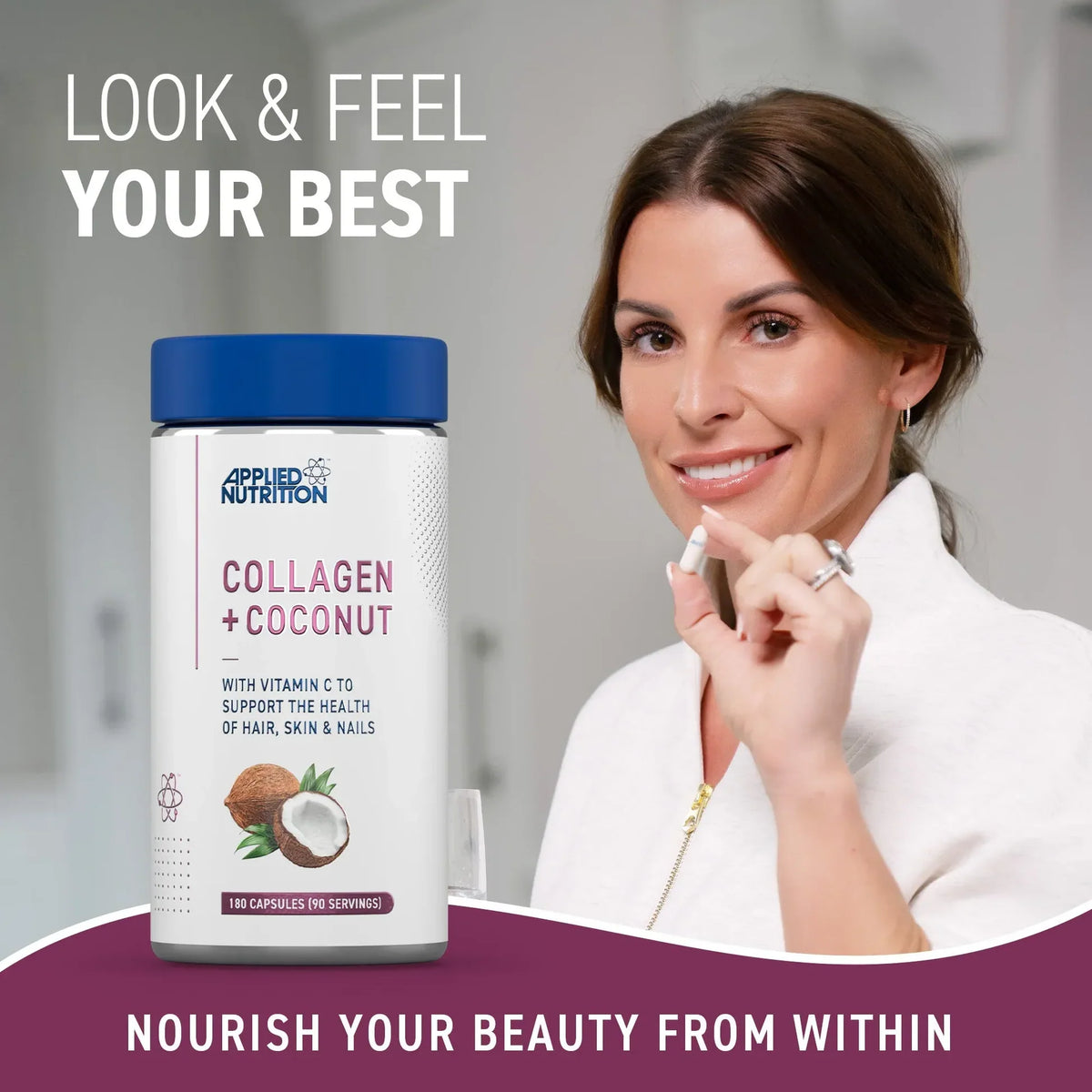
If you'd like a capsule option, our best seller is Applied Nutrition Collagen + Coconut. It combines hydrolysed marine collagen, vitamin C and coconut oil powder in a plant-based capsule shell, and it's halal certified. Each pack gives 90 servings from 180 capsules.
The bottom line
Collagen supplements aren't a miracle, and the research is still developing. Some trials show benefits for skin hydration and elasticity, while others urge caution. If you want to try one, choose a quality hydrolysed product, check the dose, and pair it with a balanced diet, sun protection and good sleep.
Not sure which product suits you? Get in touch or call us on 0800 138 3847.
Food supplements should not replace a varied, balanced diet. If you are pregnant, breastfeeding, taking medication or have a medical condition, speak to your GP or pharmacist before starting a new supplement.